
ECHO Dubai 2017:
How MICE International Pioneered Immersive Experiences in the Middle East
November, 2026
Thoughts from our team, informed by experience
NOURA HAWILO
Conceptualiser
Before immersive experiences became a familiar part of the region’s cultural and event landscape, MICE International set out to create a platform where art, design, science, and technology could meet.
today, immersive installations, interactive exhibitions, digital art, and technology-driven brand experiences are increasingly part of how we experience culture, entertainment, and events across the Middle East.
But in 2017, the conversation was different.
Generative design, wearable technology, bio-design, and interactive art were still unfamiliar concepts to many audiences. They belonged largely to specialised creative circles, research institutions, and international technology communities.
At MICE International, we saw an opportunity to bring these disciplines into a more accessible, shared space.
That idea became ECHO Dubai — the Art, Design and Technology Festival, conceptualised, created, and produced by MICE International.
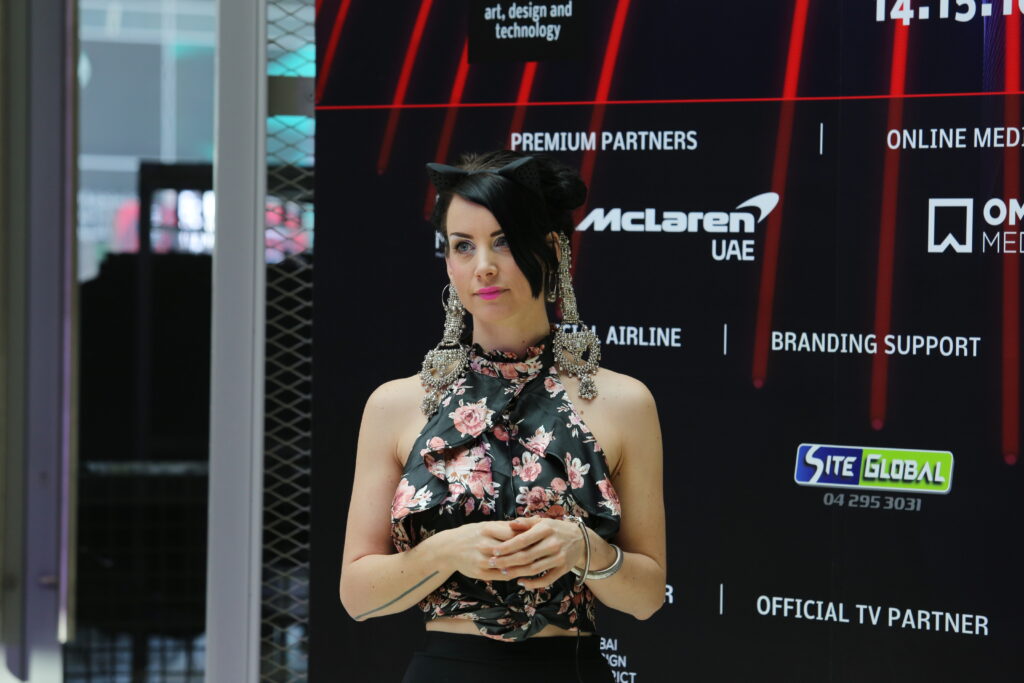
Held from 14 to 16 December 2017 at Dubai Design District (d3), ECHO brought together artists, designers, scientists, technologists, businesses, students, and curious minds under one theme:
Interacting with the Future.
Contemporary media coverage introduced ECHO as the Middle East’s first art, design, and technology festival. But for us, the greater significance was what the festival set out to make possible: a new kind of creative exchange in the region.
The Idea Behind ECHO: Making the Future Accessible
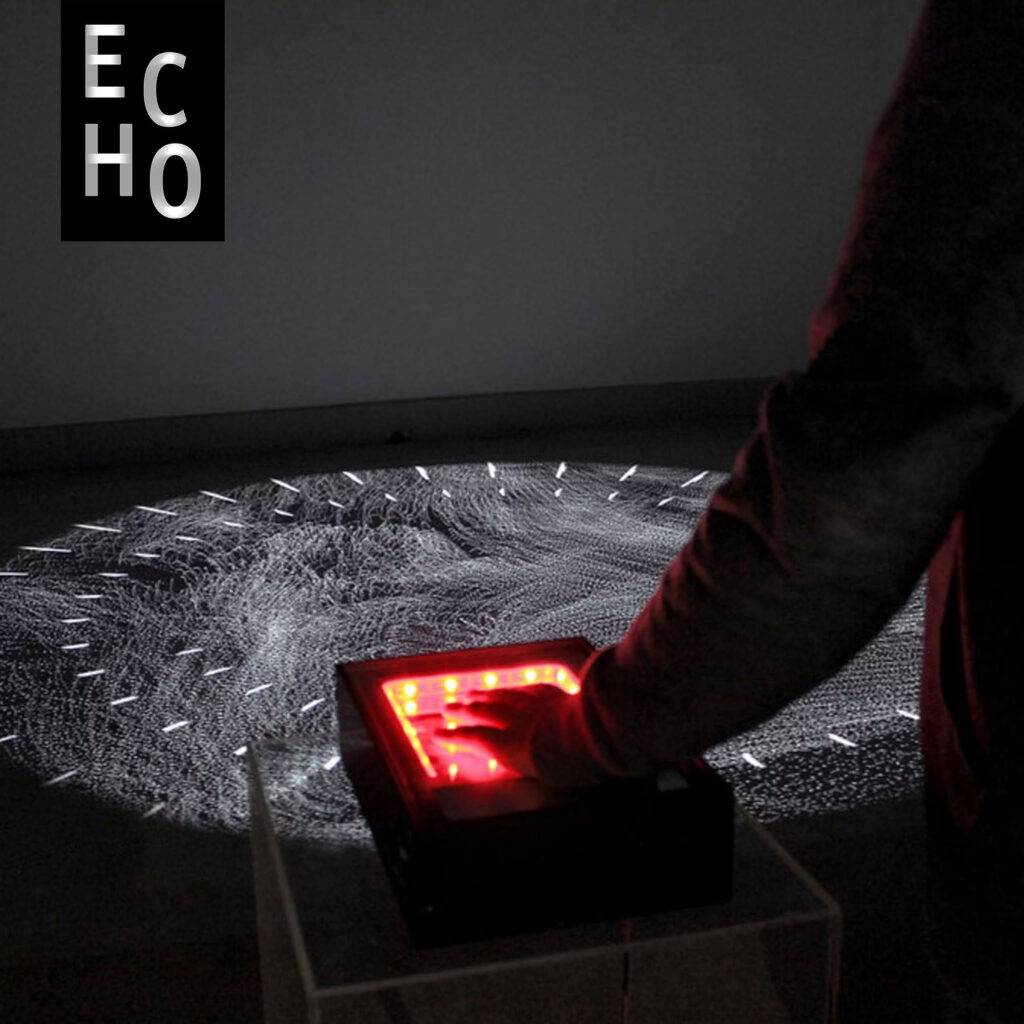
Innovation is often presented through products, technical specifications, and predictions about what’s coming next.
We wanted to explore it differently.
What happens when technology becomes an artistic medium? When fashion reacts to the human body? When sound generates visuals? When people can engage with ideas that might otherwise remain confined to research laboratories or specialist conferences?
These were some of the questions behind ECHO.
The ambition wasn’t simply to exhibit new technologies. It was to create an environment where visitors could encounter emerging ideas through art, conversation, experimentation, and participation and create a space where ART TECH expands out from the region.
At the time, Dubai was already establishing itself as a centre for creativity, entrepreneurship, and technological innovation. Dubai Design District offered a fitting setting for a festival that deliberately crossed the boundaries between disciplines.
As The National reported in September 2017, Noura Hawilo, ECHO’s conceptualiser at MICE International, had spent two years developing the festival programme.
Her vision was to bridge a gap between emerging creative technologies and the wider public, making unfamiliar concepts more approachable while encouraging collaboration between innovators.
It was an ambitious undertaking.
But creating a new festival also meant creating an audience for an experience that didn’t yet fit neatly into an established category.
Four experiencess with in one creative ecosystem.
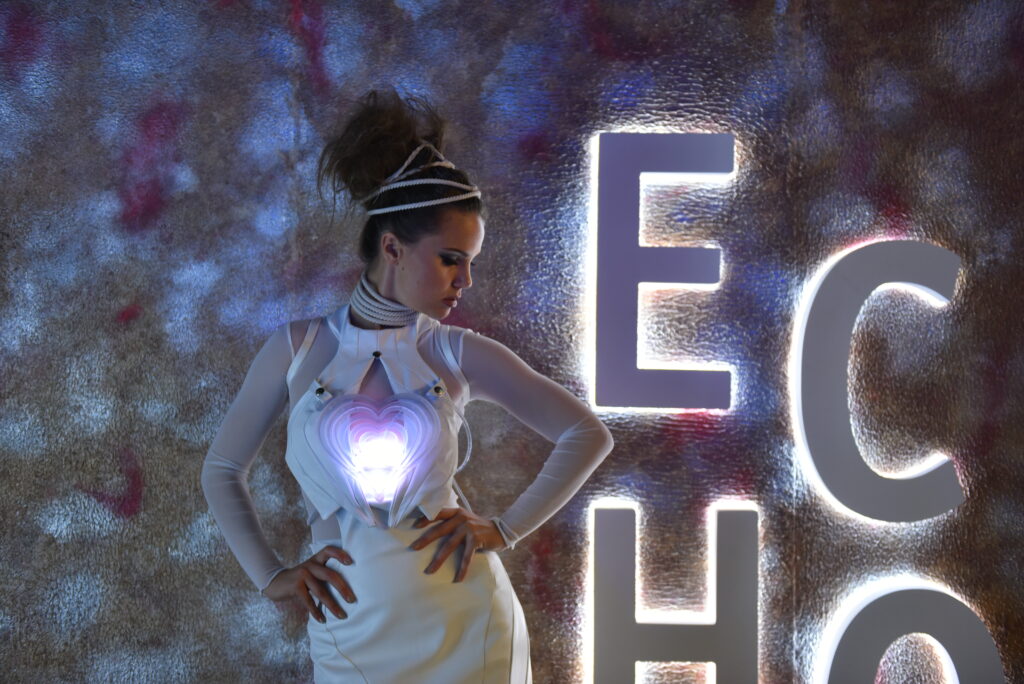
ECHO was conceived as more than a conventional exhibition or industry conference.
Its programme brought together four interconnected experiences, each offering a different way to explore the relationship between creativity and technology.
The Art & Technology Exhibition
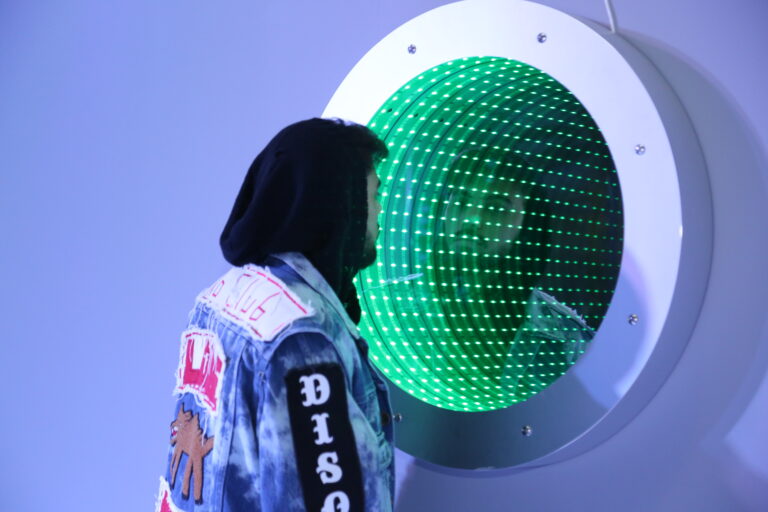
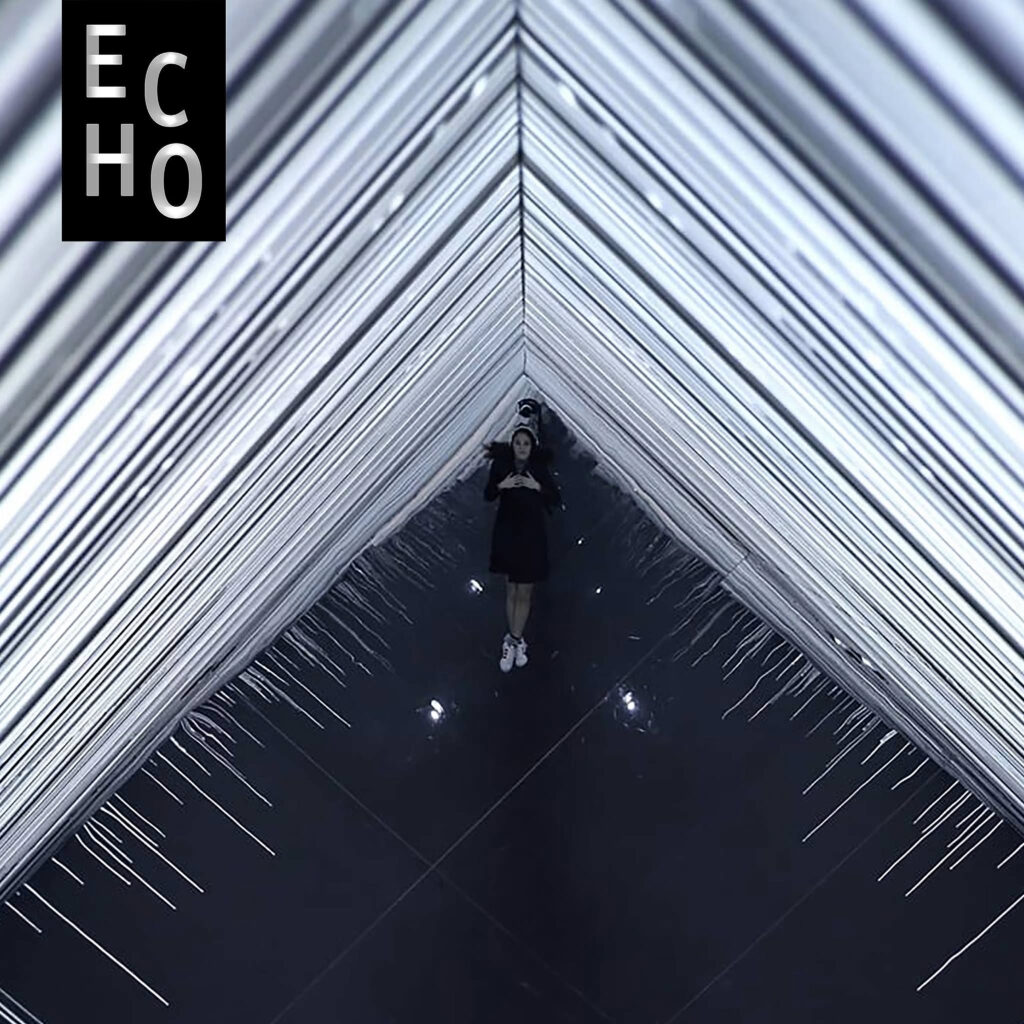
The exhibition presented immersive installations, interactive art, experimental design, and emerging creative technologies.
Visitors could explore works that challenged conventional ideas about materials, space, human interaction, and visual expression.
International gallery participation included Opera Gallery, which presented technology-related artworks involving artists such as Liu Dao, Gregory Emvy, NoArt, Tatyana Murray, and Son Bong-Chae.
Conferences and Creative Conversations
The festival programme brought global creative thinkers into discussions about the future of design, technology, and human experience.
The announced international line-up included Daan Roosegaarde, Lucy McRae, Anouk Wipprecht, Dr Koert van Mensvoort, and Floris Kaayk, among other innovators.
Topics ranged from fashion technology and bio-design to generative design, interactive experiences, and future thinking.
What connected these conversations was the belief that innovation shouldn’t exist in isolation. It becomes more meaningful when different perspectives are invited into the discussion.
Interactive Workshops
ECHO also created opportunities for practical learning and experimentation.
Rather than limiting the programme to presentations and demonstrations, workshops encouraged participants to engage more closely with creative processes and emerging technologies.
This educational element was central to the festival’s purpose.
It helped connect international knowledge with local creative talent and offered participants a more direct relationship with the ideas being explored.
ECHO Sound '17
As the day transitioned into evening, ECHO Sound brought a different dimension to the festival.
Electronic music, experimental performances, live visuals, and audiovisual technology came together in an experience where sound and digital imagery interacted.
The programme featured international and regional electronic music talent, with performances and visual experiences designed to challenge the boundaries between music, art, and technology.
Together, these four components formed a multidisciplinary festival: part exhibition, part conference, part creative laboratory, and part cultural experience.
Creating Space for the Region's Creative Talent
From the beginning, ECHO was intended to become a platform for collaboration, rather than a showcase exclusively for established international names.
One important initiative was the ECHO Open Call, inviting UAE-based creatives to submit work across media art, digital installations, computer animation, interactive design, robotics, and performance art.
The initiative involved New York University Abu Dhabi (NYUAD), whose participation in the judging process helped connect the festival with the regional academic community.
The educational dimension extended into the exhibition itself.
As documented by the American University of Sharjah, work by 20 multimedia design students from its College of Architecture, Art and Design was exhibited at ECHO Dubai.
For us, these collaborations represented an essential part of the festival’s vision.
Innovation requires opportunities to be seen, challenged, supported, and shared.
Creating a platform where emerging regional talent could participate alongside international creative practitioners was just as important as introducing audiences to new technologies.
ECHO was ultimately about building connections between disciplines, generations, and communities.
What It Takes to Introduce a New Festival
There is a particular challenge in producing an established event.
There is an entirely different challenge in creating one from the ground up.
With ECHO, MICE International was responsible for developing and delivering an original festival concept, bringing the creative vision into a functioning public experience.
Our work encompassed festival concept development, programming, speaker and artist coordination, exhibition planning, interactive experience development, sponsor engagement, marketing and public relations, registration, staffing, volunteer coordination, and end-to-end event production.
The production combined multiple formats, disciplines, audiences, and technical requirements across a three-day programme.
It required balancing the expectations of international artists and speakers with the needs of local collaborators, sponsors, exhibitors, and visitors.
Yet the defining consideration throughout was the experience itself.
How would people discover the festival? What would encourage them to explore? How could someone unfamiliar with generative design or biotechnology leave with a greater understanding of its possibilities?
These are the questions that continue to inform our approach to immersive event experiences and experiential production today.
Technology plays an essential role, but the narrative and the audience experience must come first
A Festival That Reflected a Changing Creative Landscape
Looking back at ECHO from today’s perspective is particularly interesting.
Many of the themes explored at the festival—interactive installations, responsive environments, immersive storytelling, generative design, wearable technology, and the relationship between physical and digital experiences—have become increasingly relevant to events, exhibitions, retail spaces, museums, and brand activations.
ECHO explored these intersections at a time when they were still emerging conversations in the region.
Its importance lies not in claiming that one festival created an entire industry, but in recognising its contribution to introducing a multidisciplinary, technology-led cultural experience to Middle Eastern audiences.
For MICE International, ECHO demonstrated that an event company could do more than respond to a client’s brief.
It could identify an opportunity, develop an original intellectual property, bring together an international creative community, and produce an experience that introduced new conversations to the region.
That entrepreneurial approach remains part of how we think about events
From ECHO to Immersive Event Production today
Nearly a decade after ECHO Dubai, immersive technology continues to transform the possibilities of live experiences.
Interactive exhibition pavilions, digital storytelling environments, audiovisual installations, projection mapping, and responsive multimedia are now part of the creative vocabulary of major events across the UAE and Saudi Arabia.
At MICE International, our work in multimedia content creation and 3D projection mapping and interactive event technology continues to explore the relationship between creative vision, technology, and human experience.
The formats evolve. The technical possibilities expand. Audiences arrive with different expectations.
But the question at the heart of our work remains remarkably consistent with the one that inspired ECHO in 2017.
How can we use creativity and technology to make people see, understand, and experience something differently?
ECHO was one of our earliest and most ambitious answers.
Looking Back at ECHO. Looking Forward to What's Next.
ECHO Dubai was not simply an art, design, and technology festival.
It was a demonstration of what becomes possible when people from different disciplines are given a shared platform to experiment, exchange knowledge, and challenge conventional thinking.
Conceived and produced by MICE International, the festival introduced a distinctive cultural experience to Dubai and contributed to a developing conversation about immersive and interactive creativity in the Middle East.
Its story remains an important part of our own.
Not because the future we imagined in 2017 has fully arrived, but because the curiosity that inspired it continues to shape our work.
Before an experience can change how people see the world, someone has to imagine it differently.
For MICE International, ECHO was that beginning