IN^X NEXT 2026:
A 30-Year Education Legacy, Reimagined
Where heritage meets innovation, and the future of education remains profoundly human.
November, 2026
Thoughts from our team, informed by experience

NOURA HAWILO
Conceptualiser
There’s something remarkable about a brand that has earned its place over decades.
The kind of recognition that comes not from a campaign or a clever identity, but from years of expertise, consistency, and the ability to remain relevant through change.
Heritage brands understand this particularly well. Their strength lies in what they’ve learned, the standards they’ve established, and the trust they’ve built. Yet the most enduring among them know that protecting a legacy doesn’t mean standing still.
It means knowing what to carry forward, what to rethink, and when it’s time for a new chapter.
That was the story at the heart of IN^X NEXT 2026, held on 26 October at ADNEC Centre Abu Dhabi.
An event that celebrated 30 years of the Centre of Excellence for Applied Research and Training (CERT), while introducing its new identity as IN^X Education, the education and training arm of Capital H, an investment arm of the Higher Colleges of Technology.
It was a rebrand, certainly. But more importantly, it was an opportunity to reflect on the value of education in a world that is changing faster than ever.
Thirty Years of Expertise. A Future Still Being Written.
Established in 1996, CERT has spent three decades developing talent, supporting institutions, and building capabilities across the UAE.
Its record includes more than 105,000 graduates, over 500,000 assessments, and more than 600 strategic projects.
Behind those figures lies something less easily measured: the experience of educators, the knowledge passed between generations, the relationships built with institutions, and the opportunities created for individuals.
This is what gives an educational organisation its legacy.
With the launch of IN^X Education, that expertise enters a new phase, embracing emerging technologies, evolving workforce requirements, and new approaches to learning.
Its four specialised academies—the AI and Emerging Tech Academy, National Initiatives Academy, Languages and Communication Academy, and Assessment Centre—reflect a broader understanding of what education needs to deliver today.
The new identity recognises an important truth: the future of education cannot be separated from the future of work. But perhaps the more interesting question is whether education should ever have been considered something we eventually finish.
Education Doesn't End. Neither Does the Need to Learn.
For generations, education was often understood as a stage of life.
You studied. You graduated. You entered the workforce.
Experience took over from there.
That model is changing.
Artificial intelligence, automation, digital transformation, and evolving industries are reshaping the skills people need throughout their careers.
According to the World Economic Forum’s Future of Jobs Report 2025, employers expect approximately 39% of workers’ existing skill sets to change or become outdated between 2025 and 2030. The report also estimates that 59 out of every 100 workers will require training by 2030.
These projections underline something IN^X Education’s new chapter brings into focus.
Learning is no longer preparation for the future. Learning is how we keep pace with it.
And while AI is transforming how knowledge is accessed and applied, it hasn’t made educational expertise irrelevant.
Quite the opposite.
We still need experienced educators, specialised institutions, mentors, and people who understand how to translate information into practical capability.
Technology can make knowledge more accessible. Human expertise helps us question it, contextualise it, practise it, and apply it responsibly.
The future of learning is not a choice between technology and people.
It depends on bringing their strengths together.
IN^X NEXT 2026: Making a New Identity Tangible
This was the creative challenge behind IN^X NEXT 2026.
How do you introduce a new identity while honouring the institution behind it? How do you communicate the possibilities of future learning without losing sight of the people who make education meaningful?
For MICE International, our role was to help turn that ambition into an experience.
We approached the corporate rebranding and launch event in Abu Dhabi as a journey through the institution’s past, present, and future.
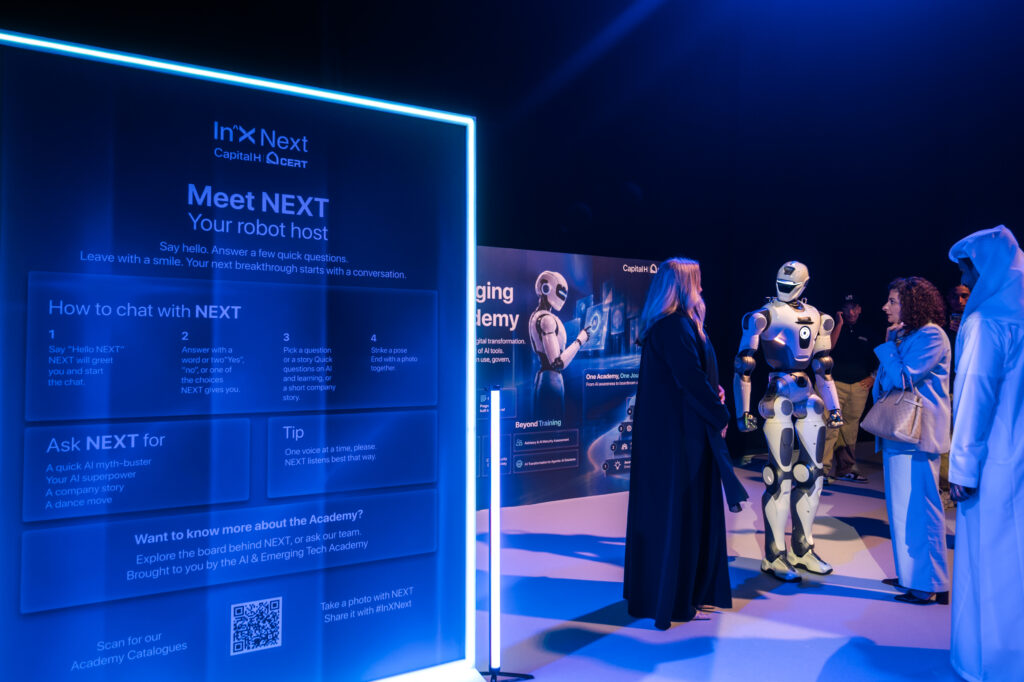
An interactive 30-year legacy wall gave guests an opportunity to explore CERT’s history and achievements. Four interactive academy experiences introduced the new educational ecosystem, supported by AI technology activations that brought future-focused learning into the physical environment.
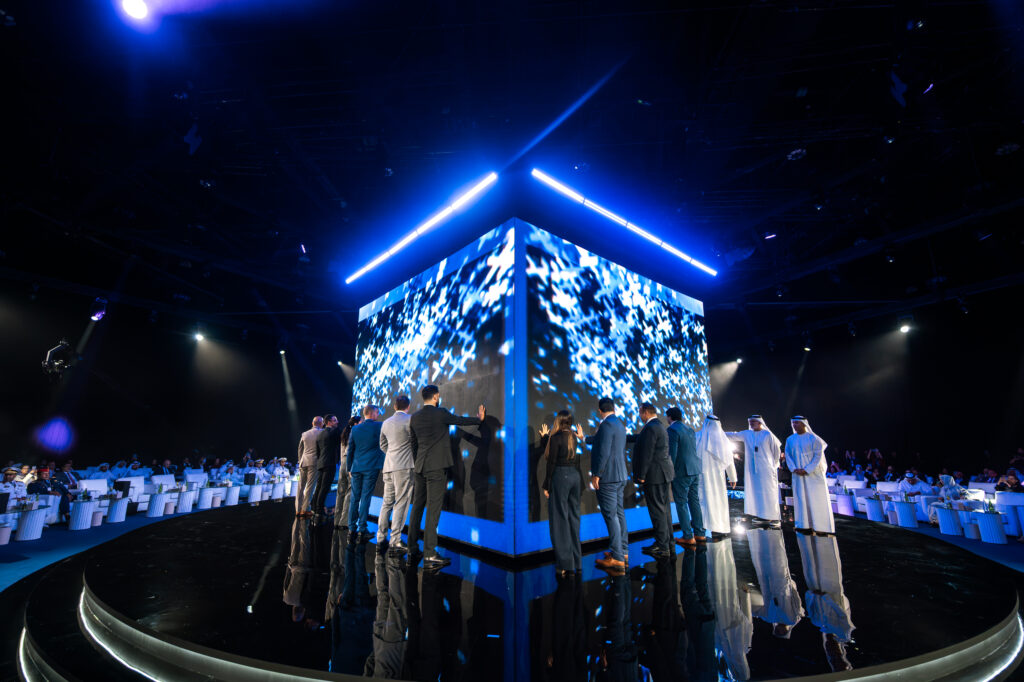
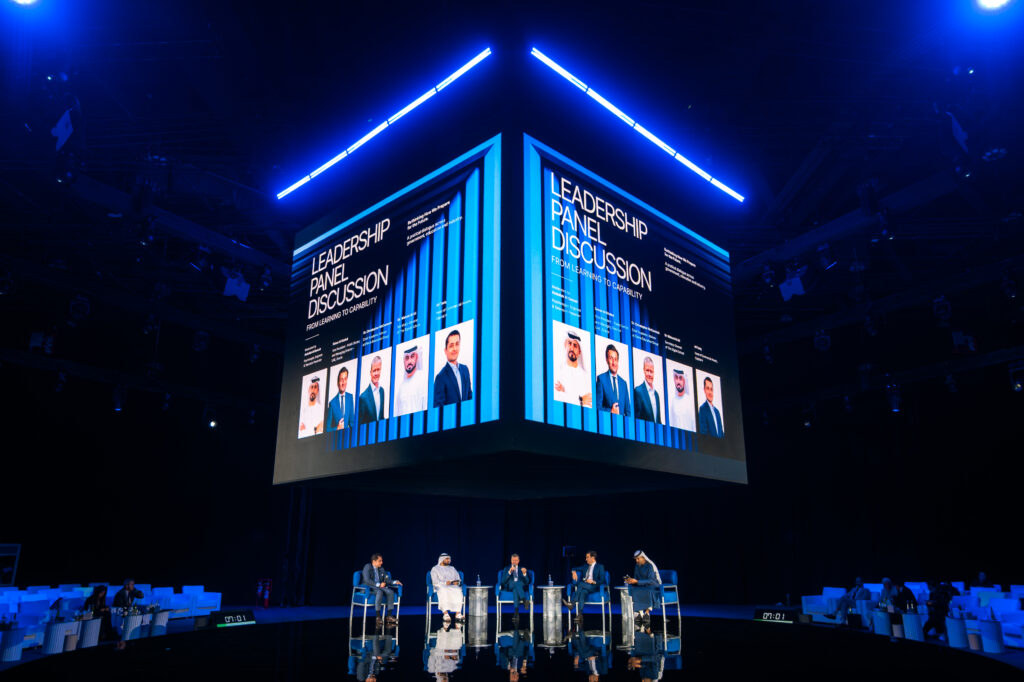
At the centre of the event, a circular stage and suspended four-sided LED cube created a distinctive setting for the brand reveal, leadership addresses, and conversations about the future.
Immersive audiovisual content, animation, and event branding helped connect the different elements into one coherent narrative.
Our work covered the creative concept, event design, multimedia storytelling, audiovisual production, interactive technology, guest experience, and end-to-end event management.
Yet for all the technology involved, we kept returning to the same question:
How do we make this experience feel human?
Because a launch of this significance deserves more than a spectacular reveal.
It needs to give people a reason to connect with what comes next.
When the Conversations Matter as Much as the Stage
One of the most compelling aspects of IN^X NEXT 2026 was the relationship between the content on stage and the conversations taking place around it.
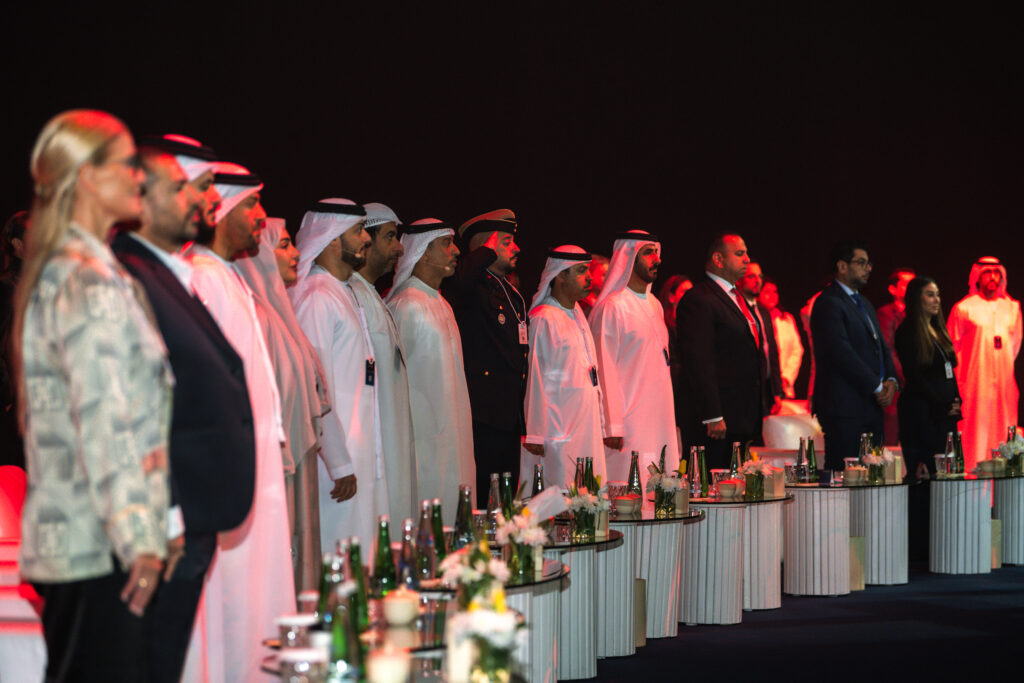
Held under the patronage and in the presence of H.E. Dr. Ahmad Belhoul Al Falasi, Minister of Sports and Chairman of Capital H, the forum brought together leaders and decision-makers from government, education, and industry.
The programme explored education, skills, and workforce development from several perspectives.
Mark Adams, Co-Founder of Araya Labs, delivered a keynote address on The Future of Education: Building Human Capabilities in the Age of AI.
The panel discussion From Learning to Capability, moderated by Abdullah Al Qassab, brought together perspectives on the skills, institutional partnerships, and approaches needed to prepare people for changing workforce demands.
These discussions gave substance to the new identity.
They also reminded us why bringing people into the same room still matters.
An expert’s perspective can challenge an assumption. A discussion can introduce a question that hadn’t previously been considered. An informal conversation between two attendees can open the door to collaboration.
These exchanges don’t always fit neatly into an event programme, yet they are often among the most valuable reasons to attend.
In an age when almost any presentation can be streamed and information can be accessed instantly, the irreplaceable value of an in-person event increasingly lies in the people it brings together.
The shared experience. The unexpected introduction. The opportunity to exchange perspectives, build trust, and simply enjoy being in the company of people with similar ambitions.
This human dimension was central to the atmosphere we wanted to create.
Technology gave guests new ways to engage with the story. The event environment created space for people to engage with one another.
Both were essential.
A Legacy Built Through People and Partnerships
Strong educational institutions are rarely built in isolation.
Throughout CERT’s 30-year journey, partnerships have played an important role in extending access to knowledge, expertise, and professional development.
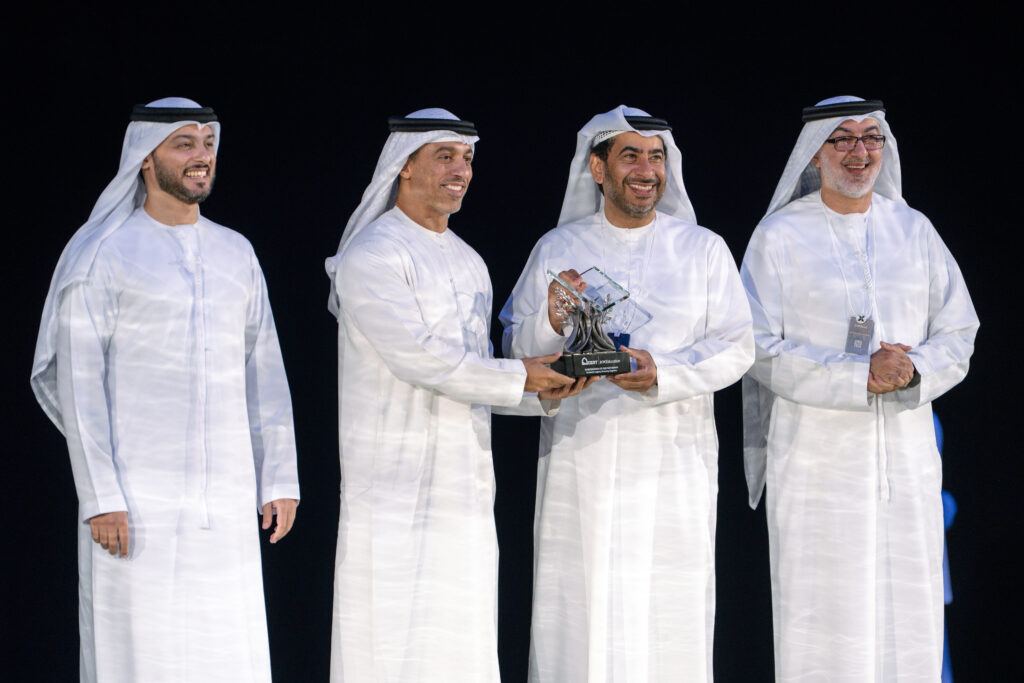
At IN^X NEXT 2026, Capital H recognised 17 long-standing partners, including the Higher Colleges of Technology, the British Council, the Ministry of Human Resources and Emiratisation, the Ministry of Industry and Advanced Technology, and the Emirati Talent Competitiveness Council (Nafis).
These relationships reflect the breadth of CERT’s contribution to education, professional training, and national capability development over three decades.
But the event wasn’t only about acknowledging the past.
It also introduced an ambitious new network of international and regional partnerships.
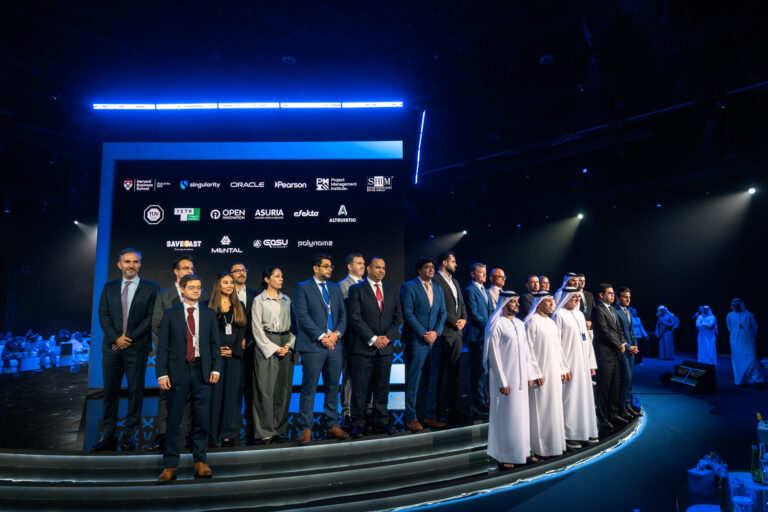
IN^X Education signed 16 memoranda of understanding (MoUs) with organisations spanning higher education, artificial intelligence, technology, professional development, and workforce training.
Among the signatories were the Harvard Business School Club of the GCC, Singularity University, Oracle, Pearson, the Project Management Institute (PMI) – UAE Chapter, and the Society for Human Resource Management (SHRM).
Other partners included TÜV SÜD, Tetr College of Business, Open Innovation, and organisations specialising in AI, training, and professional skills.
The significance goes beyond the names themselves.
Bringing together academic networks, technology companies, and professional institutions reflects a recognition that workforce development cannot exist within isolated disciplines.
AI expertise needs to meet practical application. Professional qualifications need to evolve alongside industry requirements. Educational programmes need to connect more closely with the organisations and people they serve.
As Khalid Alhammadi, CEO of IN^X Education, explained during the announcement, the new partnerships are intended to connect education more closely with the evolving needs of the labour market.
The official announcement of IN^X Education’s 16 strategic partnerships sets out the participating organisations and the wider objectives of these agreements.
For an institution entering its fourth decade, the message was particularly fitting.
The relationships that helped build its legacy were being recognised, while new collaborations were being established to support its future.
A 30-year history celebrated not as a conclusion, but as a foundation for what comes next.
A New Name. An Enduring Purpose.
The unveiling of IN^X Education marked a new beginning for an institution with an established history.
It brought 30 years of educational expertise into conversation with artificial intelligence, future skills, and new models of workforce development.
The presence of partners from education, technology, industry, and government offered a broader perspective on what that transformation could mean.
But the most important message wasn’t about technology, the partnerships, or the new visual identity.
It was about people.
The people who teach, mentor, question, learn, collaborate, and continue developing their capabilities long after formal education ends.
For us at MICE International, bringing this story to life was an opportunity to celebrate an institution that understands the value of its past without allowing that past to define the limits of its future.
And to create an environment where innovation and human connection could exist naturally alongside one another.
Thirty years of knowledge. A new identity. And a future that continues to be shaped by the people willing to learn.